花は空間をいけている Flowers Arrange Space
花をいけていると、不思議な瞬間があります。
枝を少し動かす。
葉の向きを変える。
すると、ある一点で迷いが消えます。
「ここ。」
その感覚は、考えてたどり着くものではありません。
美しいからでも、形が整ったからでもありません。
理由より先に、その場所だと分かります。
花が美しいのではありません。
美しくなるのは、空間です。
花がそこへ触れた瞬間、それまで見えていなかった空間が静かに姿を現します。
それは、花によって生み出されたものではありません。
空間には、何も置かれていないときから、すでに一つの理があります。
まだ形はありません。
まだ意味もありません。
それでも、そこには静かな向きがあります。
どこが開いているのか。
どこが静まっているのか。
どこに呼吸があるのか。
どこに命が通っているのか。
その向きは、花を置く前から、すでに空間の中にあります。
花を生けるとは、空間をつくることではありません。
すでにある空間の理に、花が静かに触れることです。
その瞬間、それまで見えなかった理が姿を持ちます。
空間が開く。
空間が整う。
空間が呼吸を始める。
その美しさは、花の美しさではありません。
空間の理が、花を通して見えるものになった美しさです。
だから、「ここ。」という感覚は、判断ではありません。
比較でもありません。
理に触れた瞬間、認識は迷いを失います。
理由はあとから言葉になります。
けれど、「ここ。」は、その前にすでに分かっています。
空間の理は、外側だけにあるものでもありません。
内側が静まるほど、その向きは自然と見えてきます。
集中して見ようとするのではなく、主体が薄くなることで、空間そのものが持っている向きが、そのまま現れてきます。
華道とは、花を飾る芸術ではありません。
空間の理を見えるものにする芸術です。
茶道にも、同じ働きがあります。
所作は形を整えるためだけにあるのではありません。
一つひとつの所作が、空間に静けさを生み、人と人が向き合う場を整えていきます。
茶道も華道も、美しさは物の中にはありません。
美しさは、物を通して姿を現した空間に宿ります。
花も、茶碗も、所作も、そのための媒介です。
そして、その空間の理は、茶室や花の前だけにあるものではありません。
日々の暮らしの中にも、何も足さず、何も引かない静かな向きとして、すでにそこにあるように思います。
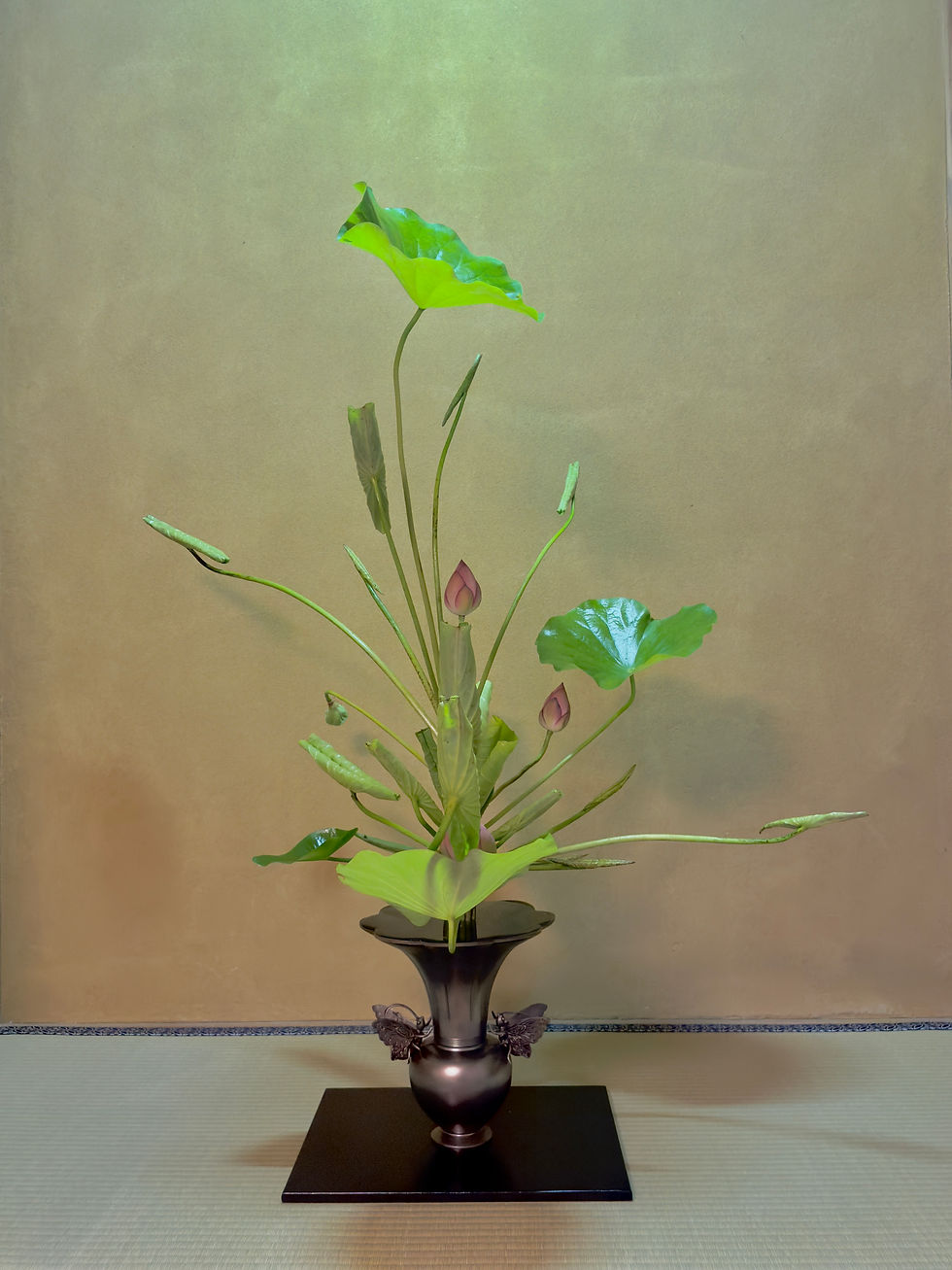
There is a curious moment when arranging flowers.
A branch is moved ever so slightly.
A leaf is turned.
And then, all hesitation disappears.
"Here."
It is not a conclusion reached through thought.
It is not because the arrangement looks beautiful.
Nor because the composition appears complete.
Before any reason arises, it is simply known.
It is not the flower that is beautiful.
It is the space.
The moment the flower touches its place, a quality of space that had been invisible quietly reveals itself.
This is not something created by the flower.
Even before anything is placed, space already possesses an inherent order—a quiet principle.
It has no form.
No meaning.
And yet, it has a direction.
Where it opens.
Where it settles.
Where it breathes.
Where life quietly flows.
That direction already exists within the space before the flower is ever placed.
To arrange flowers is not to create space.
It is to allow the flower to quietly touch the principle that is already there.
In that moment, what had remained unseen begins to take form.
The space opens.
The space settles.
The space begins to breathe.
The beauty that appears is not the beauty of the flower itself.
It is the beauty of the underlying principle of space becoming visible through the flower.
This is why the feeling of "Here." is not a judgment.
Nor is it a comparison.
The moment the mind touches that principle, hesitation simply disappears.
Reasons come later.
Words come later.
But "Here." is already known.
The principle of space is not something that exists only outside ourselves.
The quieter we become within, the more naturally it reveals itself.
It is not found through intense concentration.
Rather, as the sense of self gently recedes, the inherent direction of the space quietly comes into view.
Ikebana is not the art of decorating with flowers.
It is the art of making the principle of space visible.
The same is true in the Way of Tea.
The movements are not merely forms to be mastered.
Each gesture gives rise to stillness within the space, creating a place where people may quietly meet.
In both the Way of Tea and Ikebana, beauty does not reside in objects themselves.
It resides in the space that reveals itself through them.
The flower.
The tea bowl.
Every gesture.
They are all quiet vessels through which that space becomes visible.
And the principle of space is not found only in the tea room or before a flower.
It is already present in our everyday lives—
a quiet direction that asks nothing to be added,
and nothing to be taken away.


コメント