型の向こうにあるもの Beyond Form
更新日:8月29日
茶道では、風炉の灰の形にまで陰陽が表されています。
茶碗には正面があり、扇子には置く位置があり、花には向きがあります。
一つひとつを見れば、細かな決まりのようにも見えます。
なぜそこまで意味を持たせるのでしょうか。
日本文化は、意味を付け足してきた文化ではありません。
「在ること」そのものに理を見いだし、それを形に写してきた文化です。
自然には、明るさと暗さ、動きと静けさ、開くことと閉じることがあります。
陰陽もまた、何かを説明するためにつくられた概念ではなく、 すでにある働きを捉えたものです。
風炉の灰型も単に灰を美しく整えるためだけのものではありません。
見えない理を灰という形を通して場に写しています。
茶碗の正面も、扇子の置き方も、花の向きも同じです。
型そのものが先にあるのではなく、 どのような関係をつくるのか、どのような場を生むのか── その理由が先にあり、結果として型が残っています。
型だけを覚えると、それは決まりごとになります。
しかし、その型が生まれた背景に触れると、 所作は理のあらわれとして見え始めます。
日本文化が細部にまで意味を宿してきたのは、 意味を増やすためではありません。
見えないものを、日々の営みの中で見失わないためです。
灰を整えること。
花を生けること。
道具を扱うこと。
扇子を置くこと。
その一つひとつが、すでにある理を、 目に見える形へ静かに写しています。
花を生けていると、「ここ」と瞬時に分かる場所があります。
比較して選んだ位置でも、考えて導き出した答えでもありません。
理に触れた瞬間、迷いが消えます。
茶道の型もまた、長い時間を通して、 そのような確かさの中から残ってきたものなのかもしれません。
日本文化が大切にしてきたのは型そのものではなく、 繰り返しの型を通して、理に触れ続けること。
その静かな営みの中に、美しさが宿っているように思います。
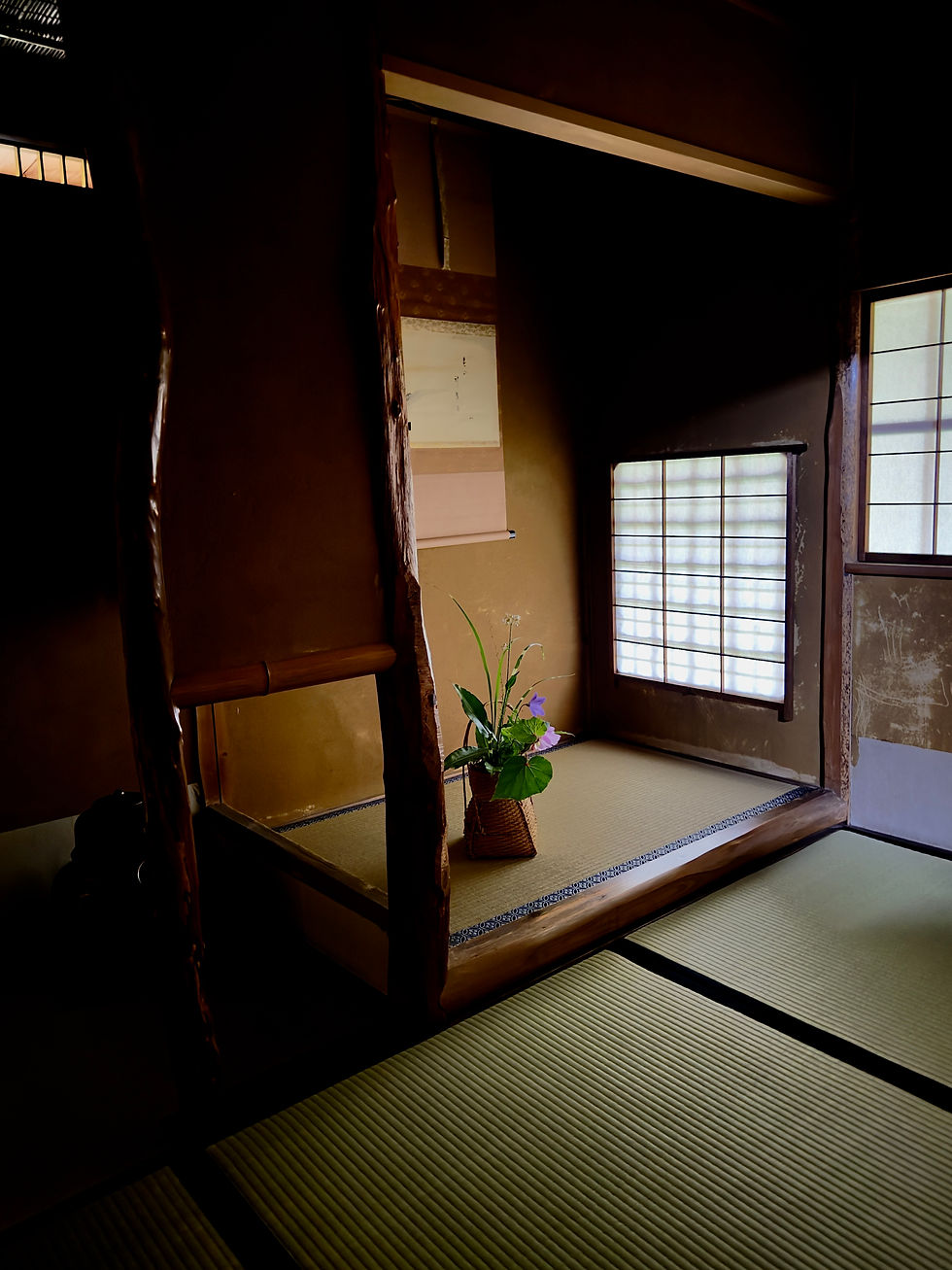
In the Way of Tea, even the shape of the ash in the furo (summer brazier) expresses the principle of Yin and Yang.
A tea bowl has a front.
A folding fan has its proper place.
A flower has its direction.
At first glance, these may appear to be nothing more than a collection of detailed rules.
Why, then, is such significance given to every small detail?
Japanese culture has never been a culture that simply adds meaning to things.
Rather, it is a culture that discovers an underlying principle in what already is and gives it visible form.
In nature there are light and shadow, movement and stillness, opening and closing.
Yin and Yang is not a concept invented to explain these phenomena.
It is a way of recognizing the principles already at work within them.
The ash pattern in the furo is therefore not arranged merely for beauty.
It quietly brings an invisible principle into the space through the form of the ash.
The same is true of the front of a tea bowl, the placement of a folding fan, and the direction of a flower.
Kata does not come first.
What comes first is the question:
What kind of relationship does this create?
What kind of space does this give rise to?
The reason came first, and over time, the kata remained.
When we learn only the kata, they become rules.
But when we encounter the principle from which they emerged, every movement begins to reveal that principle.
Japanese culture has preserved meaning in even the smallest details not to create greater complexity,
but so that what cannot be seen is not forgotten in the rhythm of everyday life.
Shaping the ash.
Arranging flowers.
Handling the tea utensils.
Placing the folding fan.
Each of these quietly gives visible form to a principle that already exists.
When arranging flowers, there are moments when one simply knows,
"Here."
It is not a position chosen through comparison, nor a conclusion reached through thought.
The moment one touches the underlying principle, hesitation disappears.
Perhaps the kata of the Way of Tea have also endured through centuries because they emerged from that same quiet certainty.
What Japanese culture has sought to preserve is not kata itself,
but the continual practice of returning to the underlying principle through kata.
Within that quiet, repeated practice, beauty naturally resides.


コメント